
When a public cloud sells you a “private” region, read the word carefully. What you are usually buying is logical isolation: your own virtual network, your own tenant, your own encryption keys, all running on hardware you share with strangers you will never meet. For the vast majority of workloads, that is genuinely enough. But there is a class of work for which it is not, and if you run any of it, you already know the quiet unease of being told to trust the software. At L&T Vyoma, we build high security data center solutions for business on a distinction the marketing tends to blur: for defence, core banking and government data, isolation cannot be logical alone. It has to be physical, and it has to be jurisdictional. A private region on shared, foreign-operated infrastructure is neither.
The Industry Already Moved the Goalposts
You do not have to take our word that logical isolation stopped being the ceiling. Watch what the biggest providers built. Oracle now runs fully air-gapped Isolated Regions — Singapore’s defence agency selected one for its armed forces in 2025 — alongside a Compute Cloud@Customer Isolated service that runs disconnected from the internet on the customer’s own premises (Oracle). Google offers Distributed Cloud air-gapped for classified workloads (Google Cloud). Microsoft has pushed Azure Sovereign into physically isolated, locally operated regions (Microsoft). When every hyperscaler races to build dedicated, disconnected, locally run infrastructure for its most sensitive customers, that is the market conceding the obvious: for that tier of work, a shared multi-tenant region is not the answer, however good its software isolation is.
Two Kinds of Isolation, and Why Both Count
Isolation done properly has two dimensions, and the sensitive workloads need both. The first is physical: your compute runs on dedicated hardware, in a space only your people enter, with the option to disconnect it from the public internet entirely. No shared tenancy, no neighbour whose breach becomes your incident, no management plane you cannot see. The second is jurisdictional: the infrastructure sits on Indian soil, operated by an Indian entity, under Indian law, so no foreign parent’s obligations can reach into it. Logical isolation — the VPC, the tenant boundary — is neither of these. It is a software promise, on someone else’s hardware, in someone else’s jurisdiction. For a defence system or a core banking platform, that is the wrong foundation to start from.
Who Actually Needs This
Most workloads do not need this, and pretending otherwise just sells fear. But some genuinely do. Defence and classified government systems require physical isolation and often a true air gap; nothing softer clears the bar. Core banking, trading and payment platforms sit under RBI’s data-localisation rules and cannot absorb a shared-tenancy breach. The stakes are not abstract: IBM put the global average cost of a data breach at USD 4.44 million in 2025, and USD 10.22 million in the United States (IBM). Critical infrastructure — power, water and transport control systems — and the crown-jewel IP of pharma and aerospace round out the list. If your workload is on it, “trust our multi-tenancy” is not a satisfying answer, and you already knew that.
What Isolation Looks Like at L&T Vyoma
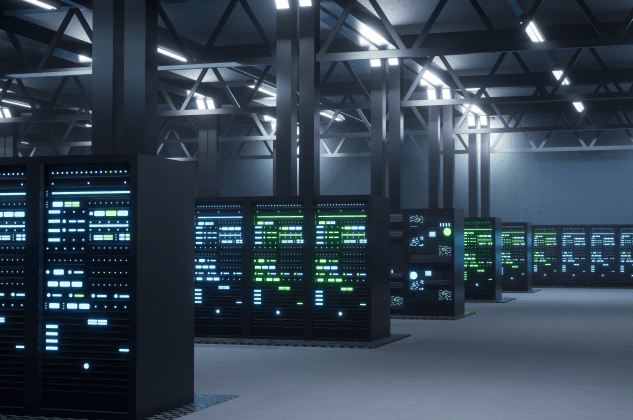
Here is how we deliver both dimensions without borrowing a foreign vendor’s “sovereign” label. Physical isolation comes from our colocation, which scales from a dedicated rack to a dedicated cage to a private suite with hardened walls and controlled entry, a space that is yours alone, and one you can run disconnected from public networks where the workload demands an air gap. For organisations that need an entire facility to themselves, our Built-to-Suit data centers are engineered from the foundation up. Jurisdictional isolation is native rather than a badge: these are L&T-operated campuses in Mumbai and Chennai, on Indian soil, under Indian law, DPDP-aligned by architecture. You do not have to trade the security of physical isolation against the compliance of Indian jurisdiction. You get both, from the same operator.
Logical, Physical, Air-Gapped: The Real Difference
|
Dimension |
Logical (Public Cloud VPC) |
Physical (Private Suite) |
Air-Gapped |
|
Tenancy |
Shared hardware, isolated in software |
Dedicated hardware, single tenant |
Dedicated and disconnected |
|
Network |
Internet-facing, segmented |
Controlled, private |
No public connection |
|
Jurisdiction |
Often foreign-operated |
Indian soil, L&T-operated |
Indian soil, L&T-operated |
|
Who sees the plane |
The provider |
You |
You alone |
|
Best for |
Most enterprise workloads |
BFSI core, sensitive government |
Defence, classified, crown-jewel IP |
Private Should Mean Private
“Private” has been stretched to cover a shared server with good software around it. For most of what a business runs, that is fine. For the workloads where a breach is a national-security event or a bank-run headline, private has to mean what it says: your hardware, your space, your jurisdiction, disconnected from everyone else if that is what the mission needs. That is not a premium tier of public cloud. It is a different kind of infrastructure, and it is the kind we build. Talk to our team about isolating your most sensitive workloads, or explore colocation and a private suite of your own.
Sources: Oracle (Cloud Isolated Region; Compute Cloud@Customer Isolated; Singapore MINDEF/SAF deployment) — oracle.com; Google Cloud (Distributed Cloud air-gapped); Microsoft (Azure Sovereign isolated regions); IBM, Cost of a Data Breach Report 2025 (average breach cost) — ibm.com.